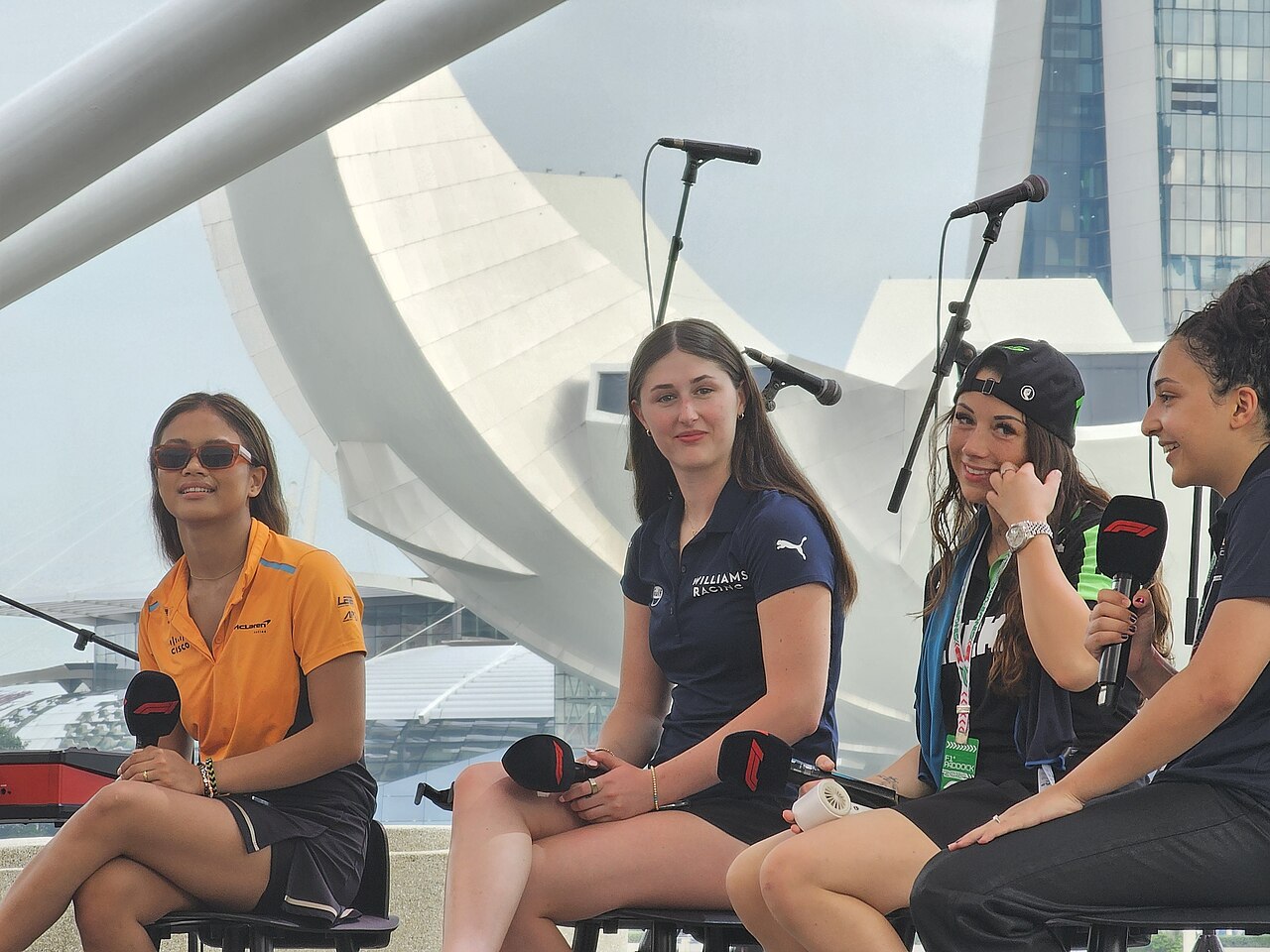
Lia Block rising star changing racing forever. Championship Built on Stage Times, Not Hype. Lia Block has established early credibility through measurable results, most notably in the American Rally Association. In 2023, she secured the Open Two-Wheel Drive O2WD class championship, becoming the youngest driver to do so in series history. This was not a single standout performance—it required consistent finishes across multiple rally rounds, each consisting of dozens of timed stages.
Rally scoring is brutally simple: total elapsed time across all stages determines position. Over the course of a weekend, cumulative competitive distance can exceed 100 miles. A one-second mistake per stage can compound into a decisive deficit. Block’s title run reflected controlled, repeatable pace rather than sporadic speed, a key indicator of long-term driver development.
Lia Block rising star Olympus Rally Proving Ground Performance
One of her most technically demanding performances came at the Olympus Rally in Washington. Known for high-speed forest roads, blind crests, and rapidly changing grip levels, the event is considered one of the most challenging in the U.S. rally calendar.
Block secured a class win there, maintaining competitive times across both days of racing. The significance lies in consistency—Olympus stages punish overdriving. Loose gravel over hard-packed surfaces reduces traction unpredictably, forcing drivers to constantly adjust braking points and steering input. Maintaining pace without incurring time penalties or mechanical damage is what separates winners from the field.
Mastering Front Wheel Drive Limitations
During her championship season, Block competed in a front-wheel-drive rally car. This is a critical detail. FWD platforms require a fundamentally different driving technique compared to all-wheel-drive cars.
Without rear power distribution, rotation must be induced through braking and weight transfer. Drivers rely heavily on trail braking—carrying brake pressure into the corner—to shift weight forward and initiate turn-in. Throttle must then be applied carefully to avoid understeer on exit.
Block’s success in O2WD competition highlights her ability to carry corner speed efficiently. In technical terms, she minimizes scrub—loss of speed due to excessive steering angle—and maintains momentum through corner sequences. This is one of the hardest skills to develop and often translates well into higher-powered categories.
Monte Carlo: Exposure to Elite Rally Conditions
Block expanded her experience internationally by competing in the Rallye Monte-Carlo, an event that tests adaptability more than outright speed.
Monte Carlo stages are infamous for mixed conditions. A single run can include dry asphalt, damp sections, and ice patches in shaded areas. Tire selection becomes a strategic gamble, and drivers must adjust in real time. Studded tires may provide grip on ice but reduce performance on dry pavement.
Completing stages in these conditions requires precise throttle modulation and situational awareness. Even minor misjudgments can result in significant time loss or retirement. Participation at this level adds critical experience in reading road surfaces and managing risk dynamically.
Transition to Circuit Racing Precision
Lia Block rising star Block’s move into the F1 Academy represents a shift from variable rally conditions to controlled circuit environments.
Here, performance is measured in lap time consistency. Differences are often within tenths of a second. Drivers must repeat braking, turn-in, and acceleration points with near-perfect accuracy across an entire race distance.
In formula cars, aerodynamic downforce allows for higher cornering speeds but demands precise input. Braking zones are shorter and more aggressive, requiring rapid peak brake pressure followed by controlled release to maintain grip. Exit speed becomes critical, as small gains compound over each straight.
Telemetry analysis plays a central role. Data traces reveal exactly where time is gained or lost—whether through early throttle application, mid-corner speed, or braking efficiency. For a developing driver, reducing a three-tenth gap per lap can be the difference between midfield and front-running positions.
Lia Block rising star Performance Metrics That Actually Matter
Across both rally and circuit racing, Block’s progression can be measured through three key metrics:
- Stage and lap time consistency
- Error rate across competitive distance
- Adaptability to different surfaces and formats
Unlike narrative-driven coverage, these metrics are objective. They determine grid positions, podiums, and championships.
A Measurable Trajectory, Not a Narrative
Lia Block’s early career is defined by tangible milestones: a national rally championship, class wins in technically demanding events, and entry into international and formula racing environments.
The significance is not symbolic. Motorsport does not reward potential—it rewards execution against the clock. If her progression continues—reducing lap time deficits in circuit racing while maintaining rally discipline—her position in the sport will be determined the same way as any elite driver: by results, not reputation.
Leave a Reply