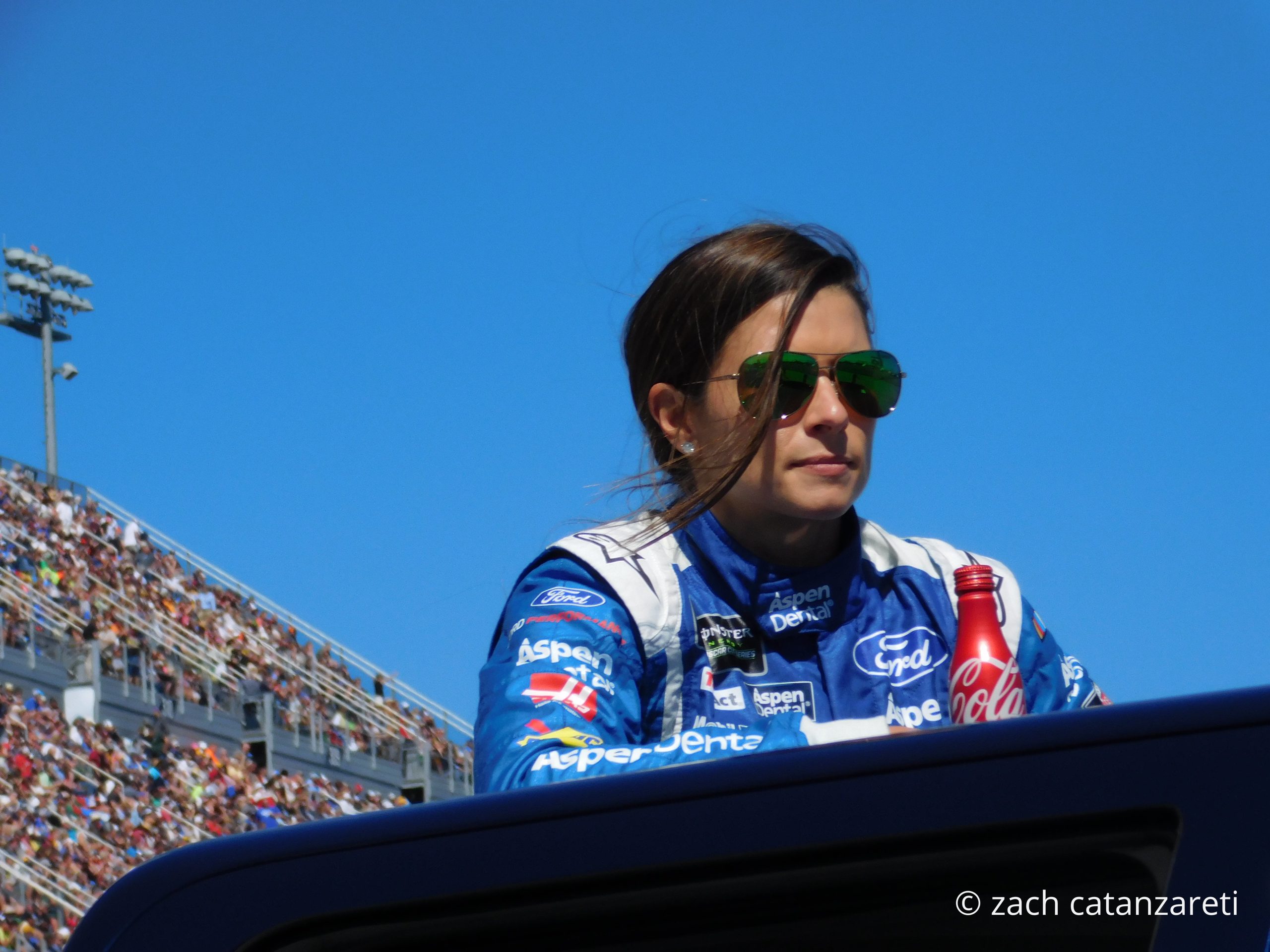
TRIUMPH THAT SHUT THE NAYSAYERS UP
Table of Contents
Every era of Danica Patrick’s racing career came with a chorus of doubters. Every era ended with the same answer.
Triumph From the Start
Before Danica Patrick was a household name, before the magazine covers and the morning-show interviews, she was a 10-year-old from Beloit, Wisconsin, winning go-kart championships. The doubters were already there — girls don’t race, they said. Danica Patrick didn’t argue. She just kept winning.
By 16, she had done what almost no American driver dares: moved to England alone to race in the unforgiving world of European junior formula. Formula Vauxhall. Formula Ford. Cold circuits, shoestring budgets, no home crowd. In 2000, Danica Patrick finished second at the Formula Ford Festival — the best result ever recorded by an American driver in that event. It was the first triumph in a career that would be defined by them.
She returned to the United States in 2002, climbed through the Toyota Atlantic Series, took pole positions — the first woman to do so in series history — and finished third in the 2004 standings. The foundation was complete. The naysayers had gone quiet, temporarily. They would be back. They always came back. And Danica Patrick would keep answering the same way.
Triumph at the Brickyard
May 2005. Indianapolis Motor Speedway. A 23-year-old rookie rolled into the most famous race in the world, and the skeptics had a new line ready: she’s just a marketing gimmick, a pretty face to sell tickets.
Then Danica Patrick set the fastest practice lap. Then she qualified fourth. Then, in the race itself, she did what no woman had ever done — she led 19 laps of the Indianapolis 500.
She finished fourth and was named Rookie of the Year, at Indy and for the series. “Danica Mania” swept the country overnight. The triumph at the Brickyard wasn’t just a result; it was a cultural detonation. She was on magazine covers and morning television, in living rooms that had never watched a single lap of racing.
But triumph comes with a price. From that day forward, every result Danica Patrick posted would be measured against impossible hype. The naysayers didn’t disappear — they just raised the bar. Win, they said. Then we’ll talk.
Triumph at Motegi
April 20, 2008. Twin Ring Motegi, Japan. Driving for Andretti Green Racing, Danica Patrick won the Indy Japan 300.
Read that again slowly, because nearly two decades later it still hasn’t been repeated: Danica Patrick became the first — and still only — woman to win a major-league open-wheel race in North America.
The triumph at Motegi came via fuel strategy. Danica Patrick stretched her final stint while her rivals pitted, and she took the checkered flag. The critics pounced instantly — it was strategy, not speed; the field was diminished; anyone could have done it. The arguments haven’t stopped since.
Here’s what the arguments miss: strategy wins count the same as any other in racing. The field was a legitimate IndyCar grid. And “anyone could have done it” is a strange thing to say about something no woman had done before or has done since. The trophy doesn’t carry an asterisk. The record book doesn’t grade on style. Danica Patrick won, and the naysayers had to find a new line.
Triumph Across a Season
“One lucky day,” they said after Motegi. A fluke. A fuel-mileage lottery ticket.
Then came 2009, and Danica Patrick made the fluke argument look foolish. She finished third at the Indianapolis 500 — bettering her own rookie record and still the best finish ever by a woman at the Brickyard. She ended the season fifth in the IndyCar Series standings, a career high.
The full IndyCar ledger tells the story of sustained triumph, not a single lucky afternoon: 115 starts, 1 win, 7 podiums, 3 poles. Danica Patrick was a consistent front-half driver in one of the most competitive eras of American open-wheel racing — all while carrying a media circus that no male driver of her generation had to manage.
Flukes don’t last a season. They don’t produce seven podiums. The 2009 campaign was Danica Patrick’s quiet, statistical rebuttal to everyone who tried to shrink Motegi into an accident. It didn’t silence them — nothing ever fully does — but it moved the goalposts again. Fine, they said. Do it in NASCAR.
Triumph at Daytona
The jump to stock cars was the biggest gamble of Danica Patrick’s career. She eased in through the Nationwide Series with JR Motorsports, went full-time in 2012, and finished 10th in points — the best ever for a woman in a major NASCAR series. Many believed Danica Patrick had genuine Xfinity-level talent and could have won races with more time.
Instead, she leapt to the Cup Series full-time in 2013 with Stewart-Haas Racing. The debut was pure triumph: Danica Patrick won the pole for the Daytona 500 at 196.43 mph — the first woman to start a Cup race from P1, and At the time, it was the fastest Daytona 500 qualifying speed since 1990. She led green-flag laps and finished 8th, the best Daytona 500 result ever for a woman.
The triumph at Daytona was the high-water mark of her NASCAR years. Over 191 Cup starts, Danica Patrick collected 7 top-10 finishes — breaking Janet Guthrie’s record — with a best of 6th at Atlanta in 2014. But the wins never came, the consistency never fully arrived, and after 2017 she lost her full-time ride. The honest assessment: she was rushed to Cup before she was ready, in machinery that never suited her open-wheel-honed style. The naysayers called the whole experiment a failure. The pole at Daytona says otherwise.
Triumph Beyond the Track
“She never won a championship.” “One win in 115 IndyCar starts.” “Zero wins in 191 Cup starts.” “The fame outran the results.”
This is the final argument, and it deserves an honest answer. Danica Patrick was not the best driver of her generation. The numbers say so plainly. But triumph isn’t only measured in championships — and significance isn’t only measured in trophies.
Danica Patrick was the first woman to win an IndyCar race. The first to lead laps at the Indianapolis 500. The first to win a NASCAR Cup pole. She brought millions of new fans to racing. She proved a woman could compete full seasons at the absolute pinnacle of American motorsport and hold her own. The triumph beyond the track is the one that compounds: every young woman in racing today drives through a door Danica Patrick kicked open.
She closed her career on her own terms with the self-dubbed “Danica Double” in 2018 — the Daytona 500 and the Indianapolis 500, start where you started, finish where you peaked. Neither race ended well. Both were the point.
The naysayers had a new line for every chapter. Danica Patrick had a triumph for every line. That’s the career. That’s the record. And that’s why we’re still talking about it.
r/motorsports — 2008 Indy Japan 300 anniversary: https://www.reddit.com/r/motorsports/comments/1spjwr6/18_years_ago_danica_patrick_as_the_1st_female/
r/racing — Indy 500 rookie retrospective: https://www.reddit.com/r/racing/comments/1taliog/13_days_until_the_110th_indianapolis_500_danica/
r/NASCAR — Daytona 500 pole anniversary: https://www.reddit.com/r/NASCAR/comments/1atkoq0/nascarman_otd_11_years_ago_danica_patrick_won_the/
Britannica — Danica Patrick biography: https://www.britannica.com/biography/Danica-Patrick
Wikipedia — Danica Patrick: https://en.wikipedia.org/wiki/Danica_Patrick
IMS — Driver stats: https://www.indianapolismotorspeedway.com/events/indy500/history/historical-stats/driver-stats/drivers/danica-patrick